Showing posts with label Lake Moraine. Show all posts

Friday, July 29, 2011

Short trips from Calgary

Here is a list of some of the interesting visits we made around Calgary:


Banff town is in a valley of the Banff National Park. It is at the right distance from any place (Calgary/Golden/Jasper) and a good stop over for some delicious food or drink. For all the foodies, this is a go-to place as the town is filled with all kinds of restaurants, bars and cafés due to the high volume of visitors all round the year. People like us would love to just drive to this place as both the drive and the meal would be worth the visit. Being a tourist place, there is something for shopoholics too. Also, in winter, Banff is close to many popular ski lodges.


Lakes of Banff National Park: If heaven is a place on earth, it probably would be in the Canadian Rockies and Banff is in the heart of it all. This bewitching place is a must visit for nature lovers. This park is home to a host of flora, fauna and lakes. Be it the massive Lake Minniwanka, serene Lake Louise, pristine Bow Lake or the blue-green Moraine Lake, each comes with its own charm and grandeur.

Columbia Icefields Experience: One doesn’t need to fly or sail to Alaska to experience Glaciers. Situated on the ice fields parkway of Jasper National Park, Athabasca Glacier presents a unique opportunity to visit a glacier on specially designed vehicles. The trip from the base to the glacier also allows one to experience the glacier on foot once you reach the summit. Though the glacier is slowly receding over the past decades, the colossal Athabasca Glacier is still quite a spectacle.

Note: A Glacier is a perennial mass of ice which moves over land. It forms in locations where the mass accumulation of snow and ice exceeds ablation over many years. Glacier ice is the largest reservoir of fresh water on Earth. Glaciers move constantly. So every few years, they have to make a different approach road to the Glacier. Receding glacier is different from a moving glacier. (Source: Wiki)

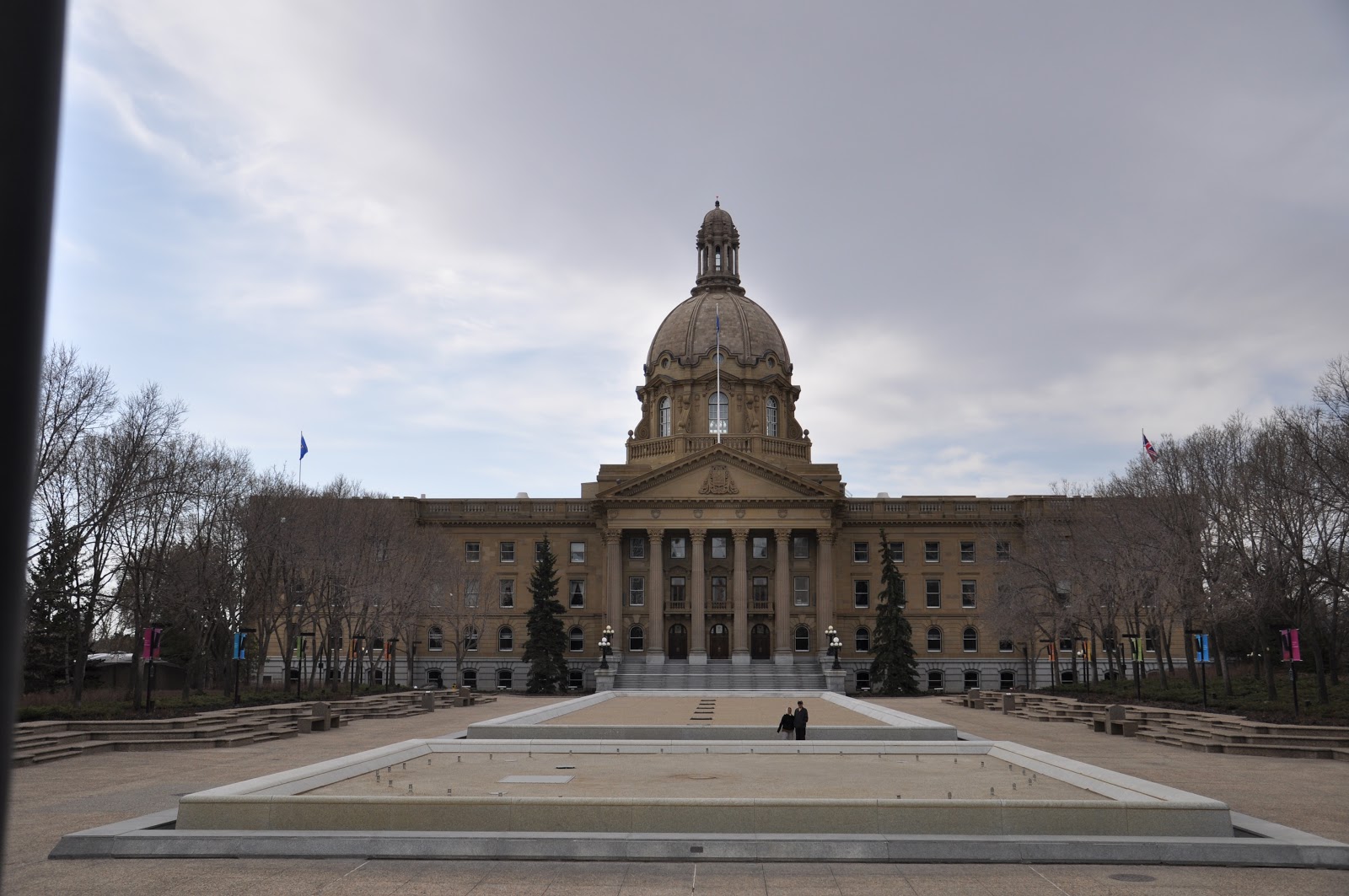
Edmonton: This is the capital of Alberta province. The North Saskatchewan River flows right through the city, giving a panoramic view of downtown Edmonton. Though not many people like visiting Edmonton, we’ve always found it to be a pleasant place. We visited the Royal Alberta Museum and Muttart Observatory apart from checking out the Legislature and Old Strathcona area (including the very popular Whyte Avenue known for its resturants). There is a good arty feel about downtown as well. Edmonton houses 1 of the largest shopping malls in the world (largest in N.America) – the West Edmonton Mall. This mall hosts more than 800 shops, a hotel, an amusement park, a water park and other attractions – all indoors. We also managed to go for a late night standup comedy show as well. (Refer an older post on Edmonton here). 


Drumheller: Also known as the dinosaur valley, Drumheller has the largest deposits of dinosaur fossils in the world. The Royal Tyrell Museum here is considered as an authority on the subject and is often invited to other parts of the world during excavations, symposiums, etc. Allow for at least 2 hours at the Museum (we took 3), which has an excellent collection and is very well maintained. Apart from dinosaurs, Drumheller is also known for its unique terrain – the badlands and hoodoos.

Badlands is a type of arid terrain where softer sedimentary rocks and clay-rich soils have been extensively eroded by wind and water. It can resemble malpaís, a terrain of volcanic rock. Canyons, ravines, gullies, hoodoos and other such geological forms are common in badlands. Badlands often have a spectacular colour display that alternates from dark black/blue coal stria to bright clays to red scoria. (Source: Wiki)

A Hoodoo (also called a tent rock, fairy chimney, and earth pyramid) is a tall thin spire of rock that protrudes from the bottom of an arid drainage basin or badland. Hoodoos are composed of soft sedimentary rock and are topped by a piece of harder, less easily-eroded stone that protects the column from the elements. (Source: Wiki)

Saskatoon Farm, Okotoks: A 45 minute drive from downtown Calgary, this place is a 1 stop shop for organic needs. The farm is mainly known for growing Saskatoon berries and hence you get ample of jams, sauces, pies, ice creams - all made from Saskatoon berries. The farm has a huge nursery selling seasonal & perennial flowers, plants and trees. They have an interesting shop sells bits and odds including garden accessories, paintings and furniture. They also sell farm products and their Saskatoon berry food items. Apart from all the above, they have a lovely restaurant on site. We had a scrumptious brunch here before we toured the farm.


Head-smashed-in-buffalo jump: A UNESCO world heritage centre which showcases customs followed by native Indians for 1000s of years. Due to their vast knowledge of topography and of bisons in general, they killed these bison by chasing them over cliffs and subsequently carving up the carcasses in the camp below. They would use the carcasses to make food, clothing, jewelry, items for trade. Though the cliff itself isn’t a great sight, the interpretive centre is definitely worthy of a visit.

Waterton Lakes National Park: Also called as Waterton-Glacier International Peace Park, is to the South of Calgary and borders US. Infact the huge Waterton Lake is mostly in Canada (Alberta) and partly in the US (Montana). If you take a cruise around the lake, it is probably one the easiest borders to cross without paperwork (just kidding). This park is popular for wildlife including hosting a Bison Paddock. A variety of camping sites and hiking trails are available including Crypt Lake hike which is one of the most popular hikes in Canada!

On the way to Waterton or Head-smashed-in-Buffalo Jump (or Southern Alberta) and you have the time, it is worth dropping by the Aviation Museum in Nanton. This museum has a decent collection of war planes including Lancesters. The other place worthy of a mention is Cardston which is home to the Remington Carriage Museum. It is the largest horse drawn carriage museum in North America and gives a wonderful insight into travel before cars.

Apart from the above mentioned sights, there are a host of other national and provincial parks worth visiting. Apart from their sheer beauty, nature and outdoor lovers have plenty of activities they can choose from in these parks. Experiencing and exploring this part of Canada can easily take weekends off your calendar very easily.

Places of visit on map:

View Folks visit Calgary in a larger map


Wednesday, September 9, 2009

First visit to the Rockies

Our new friends Mujir and Avanti were really keen to go out of town since they just got a car. We instantly jumped at the idea. Always ready to go somewhere, see a new place or do something different. So we met on Friday over some really sad Chinese dinner to plan it out. We decided to go for the GlobalFest’09 on Saturday and to Lake Moraine/Louise on Sunday.

We planned to leave early so that we could cover both the lakes and also get back into town to get ready for yet another work week. We finally left at 7:00AM. Our first impression of the Rockies was that they were really rocky. It reminded me of one of my most favorite trips - to Uttaranchal. The towering Himalayas seemed just as or rockier. There were hardly any snow capped mountains on this fine summer day, making it look more barren than ever I suppose.

Our first halt was Lake Moraine. The cold hit us as we got of the cozy car. I was shivering to the bone despite having a pull-over and a bandana. So we decided to start with a packed breakfast from home and HOT coffee from the café there. Soon Avanti and I got busy making sandwiches and little did we notice a squirrel quietly sneaking behind us to steal one of the sandwiches. Only when some of the other visitors squealed did we realize. We hastily tucked in our breakfast as the squirrel didn’t seem scared to take more. We then decided to take the walking trail around the lake. As we walked by, the weather seemed to get better and that’s when we realized the turquoise blue color of the lake. It was stunning. Apparently the rocks beneath the lake give the color effects. We soon heard a cascade/water falls nearby. We walked to the end of the trail to realize that the sound was of the white water river which fed the lake. The source was a glacier nearby. We walked on the wild side for a bit and for some photos before retracing our steps to the car.

Our second halt was Lake Louise. This was more “touristy” than Lake Moraine. There were thousands of visitors around. The lake was bigger than the one before. It was blue too – but a deep blue. The lake was surrounded by coniferous forests on 2 sides, glaciers on the 3rd side and we stood on the 4th. It was a spectacular view. We decided to return to this place every season as we are sure each season will bring in a different charm to the place. Hunger and huge crowds made us leave the place soon.

Our final destination was Banff Village. We basically went there just to eat. We found a quite French restaurant where we devoured our Fish n Chips, Veg Pizza (made on a bed of potato, not bread) and sandwiches gleefully. We did realize that Banff is a very picturesque place with lots of eateries and stores showing how important tourism is for the village economy. But we didn’t go around the village much as we had to head back home.

We reached back by 18:00, a day well spent in the Rockies. Hopefully the next time we visit, it would be for camping.